HR
What 'AI-powered' actually means in HR software
A screening chatbot, a skills graph, and a job-post editor are three different products. HR buyers keep getting pitched all three as the same miracle.
Gregory Greenstein, Aiacent
- Published
- Updated
- Pricing verified
- 9 min read
- How we rank
Paradox
8.7/10Best for high-volume hiring
Conversational hiring for high-volume roles.
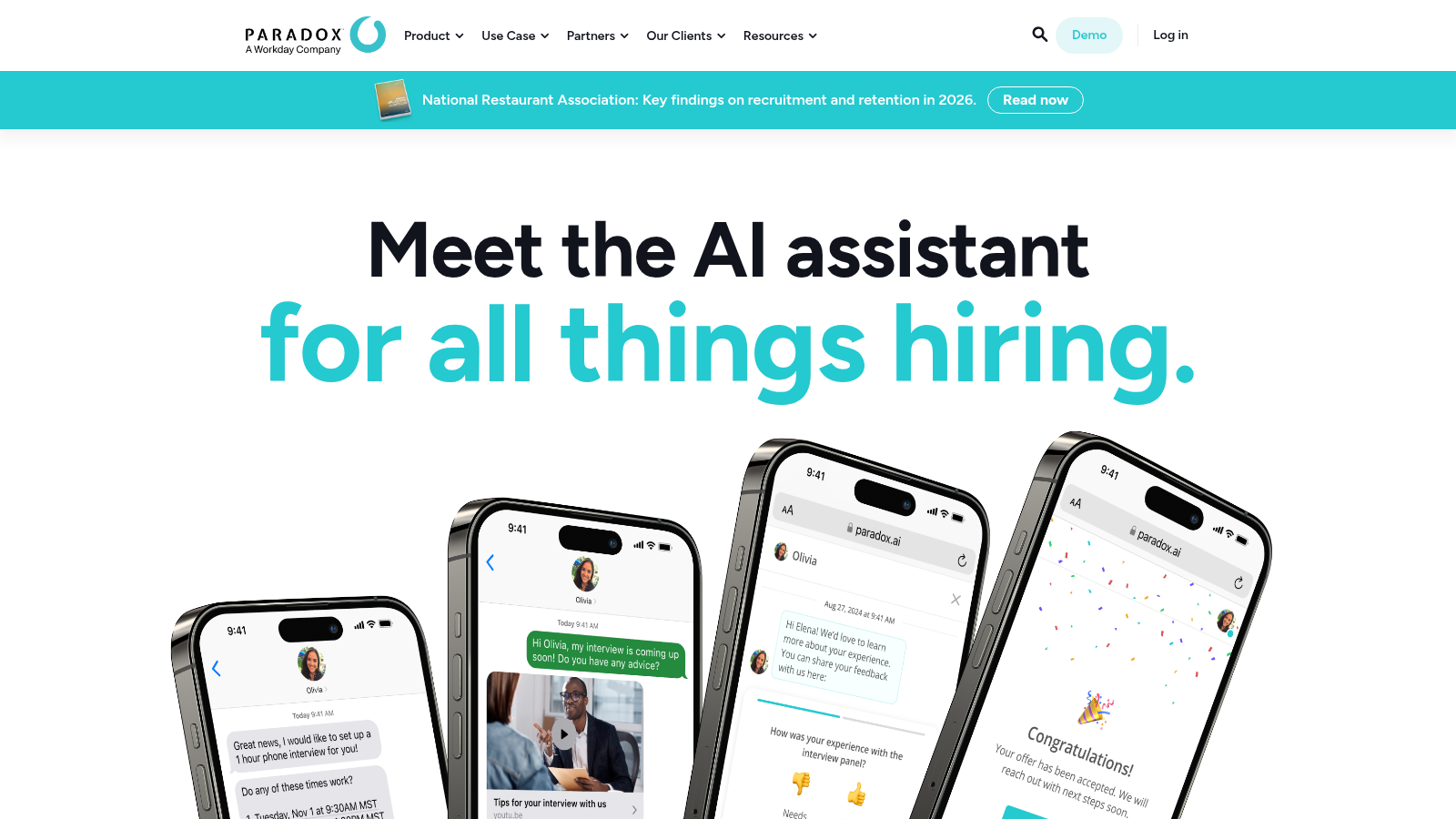
Paradox's assistant, Olivia, is one of the few HR 'AI' products that replaces a real pile of work: answering 'what's the pay range,' booking interviews, and keeping hourly candidates from dropping off because nobody texted them back.
- Best for
- Retail, hospitality, healthcare, and logistics teams hiring at scale.
- Skip if
- You hire twenty specialists a year and already have a thoughtful recruiter.
Why it ranks
- Olivia (the assistant) actually texts candidates like a coordinator would
- Scheduling, screening, and FAQs take a brutal amount of recruiter time off the table
- Built for hourly and frontline hiring, not bolted on later
Watch-outs
- You will implement it like software, not like a Chrome extension
- Overkill for specialist / exec search
- Conversational AI still needs a human on edge cases and legal review
Eightfold AI
8.2/10Best talent intelligence
Talent intelligence for enterprises that already have the data.
Eightfold is talent intelligence: matching, internal mobility, and a skills graph that tries to see people as more than the last job title they typed into Workday. It is one of the few HR AI platforms that is not pretending to be a chatbot.
- Best for
- Large employers that want internal mobility and smarter matching, not just inbound apply.
- Skip if
- You do not have a talent data problem — you have a sourcing-capacity problem.
Why it ranks
- Skills graph is more interesting than keyword matching
- Internal mobility is a first-class use case, not a slide
- Serious product for global talent orgs
Watch-outs
- Heavy. Implementation is a program, not a login.
- Smaller TA teams will not use half of it
- Model quality still depends on the messiness of your HRIS data
Product look · figure pending
Eightfold AI
Best for. Large employers that want internal mobility and smarter matching, not just inbound apply.
Skip if. You do not have a talent data problem — you have a sourcing-capacity problem.
No vendor screenshot until a rights-cleared file exists at public/figures/eightfold.png. We do not hotlink app UIs.
Textio
8.0/10Best job-post writing
The job-post editor that pays for itself in applicant quality.
Textio is not trying to be your ATS. It scores and rewrites recruiting copy so more of the right people apply. That sounds small until you have watched a 'ninja rockstar' post quietly filter out half the market.
- Best for
- TA and employer-brand teams that write a lot of job posts and career-site copy.
- Skip if
- You post three roles a year on LinkedIn and call it a talent strategy.
Why it ranks
- Specific, evidence-backed guidance — not 'make it more engaging'
- Catches gendered and exclusionary phrasing recruiters are numb to
- Lightweight compared with a full talent-intelligence suite
Watch-outs
- Narrow: it will not source, screen, or schedule
- Guidance can feel preachy if your culture is 'post and pray'
- You still need a human who knows the role
Product look · figure pending
Textio
Best for. TA and employer-brand teams that write a lot of job posts and career-site copy.
Skip if. You post three roles a year on LinkedIn and call it a talent strategy.
No vendor screenshot until a rights-cleared file exists at public/figures/textio.png. We do not hotlink app UIs.
Open a modern HR RFP and 'AI' appears in every line. That word is doing three unrelated jobs, and mixing them up is how you spend a year implementing the wrong system.
This page is the vocabulary. The 2026 HR ranking is the scored short list — Paradox, Eightfold, Textio. The recruiting ranking is the sourcer-and-ATS version if TA also owns outbound. The HR / hiring stack is the start-here ladder if someone is pitching a twelve-logo OS. Read this one first if the deck still says 'AI-powered' as if that were a SKU.
1. Conversation and coordination
This is Paradox / Olivia territory: text the candidate, ask the knockout questions, book the slot, answer 'what does it pay.' It is close to a coordinator. It is not talent intelligence. If your pain is no-shows and unworked hourly reqs, this is the job.
2. Matching and mobility
This is Eightfold's lane: a skills graph, internal mobility, a less dumb ranking of inbound. It assumes you have data, an owner, and patience. It will not text a candidate back at 9pm. Buy it when the tragedy is that you keep hiring externally for skills you already pay for.
3. Language
Textio (and, more loosely, Grammarly) sit on the words you already ship: job posts, career-site copy, outreach. Cheap compared with a platform. Useless if nobody writes posts because the leak is further down the funnel.
Who should skip this buying meeting
- A 12-person startup that needed a better LinkedIn post — not a coordinator bot, not a skills ontology
- A team whose leak is sourcers and sequences — that is the sales ranking and the recruiting ranking, not Olivia
- Anyone who will not put legal in the implementation of a system that ranks people
Bias is not a feature toggle
Any system that ranks people is a high-risk system. 'We use AI' does not make it fairer; sometimes it just makes the unfairness harder to see. Demand documentation, a human path for adverse decisions, and the right to turn a model off. Then have legal in the implementation, not the launch party.
Our HR ranking is deliberately short. That is the point. Pick the job, then pick the tool. Paradox pricing and is Paradox worth it are the subscription versions if finance already has a quote. Do not add a fourth 'platform' so the slide looks comprehensive.
A sane order of operations: name the leak in one sentence, read the skip-if on the matching review, then ask for a pilot on that job only. Coordinators first if hourly reqs die in the inbox. Language first if applicant quality starts at the post. A skills graph last, and only if someone already owns internal fill. Mixing all three into one RFP is how 'AI-powered' becomes an eighteen-month implementation.